 blog
Printable Classroom Activities for Kids: 10 Ready-to-Use Ideas
Quick Summary
Printable classroom activities for kids are worksheets a child can start with almost no explanation, a sub can run without calling you, and that print in black and white. Good ones take five to fifteen minutes and work with just a pencil. Ten ready-to-use ideas, grouped by grade band, make a full week of coverage.
- Check three things first: can a child start from the page alone, does it take five to fifteen minutes, and does it need only a pencil.
- Print three activities at a time, pilot them for a week, then add the next three.
- Sight-Word Bingo for K-2 takes about 5 minutes of prep.
- Keep early-reader sheets to one skill so struggling readers can succeed quickly.
- Build the emergency sub packet starting with a cover sheet and welcome note, then the schedule and roster.
Table of Contents
- Printable Classroom Activities for Kids: What Makes a Good One
- Ten Printable Classroom Activities to Keep on Hand
- Activities for Early Elementary Readers
- Activities for Upper Elementary Students
- Printable Classroom Management Tools That Keep Activities Running Smoothly
- Building an Emergency Sub Plan Packet With Printables
- Assemble Your Printable Activity Folder This Week
- Frequently Asked Questions
Printable Classroom Activities for Kids: What Makes a Good One
Last Updated: November 18, 2026
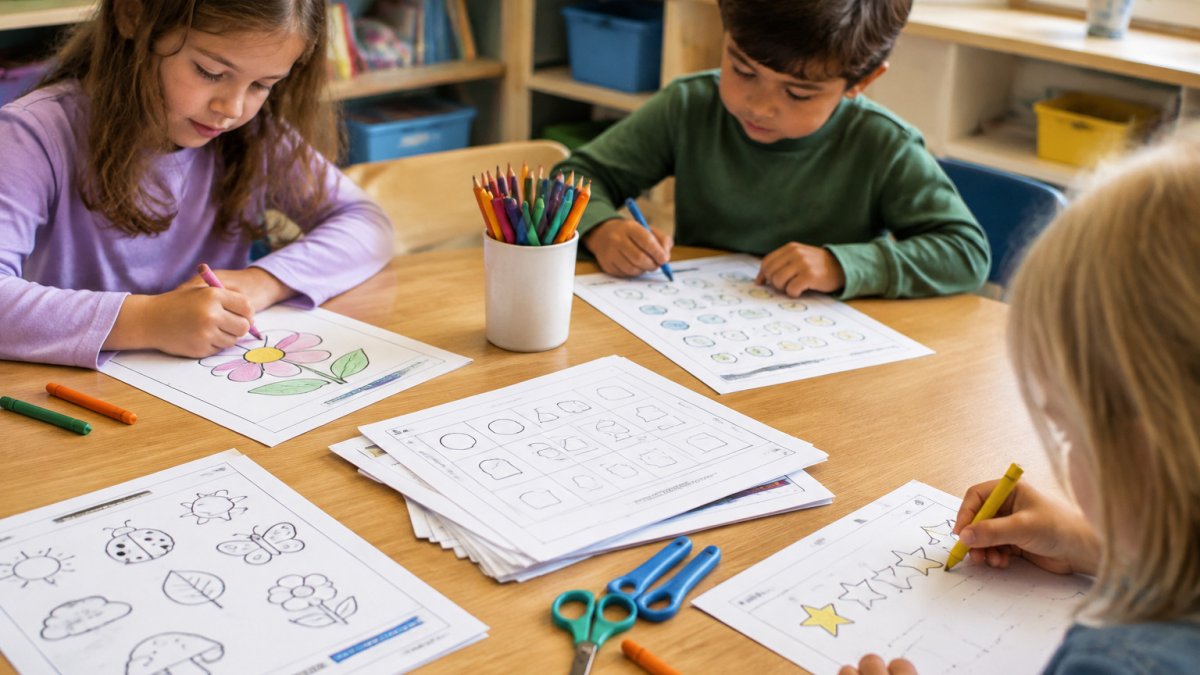
Printable classroom activities for kids save teachers hours of prep time, but only when they are built well. A good printable is one a child can start with almost no explanation, a sub can run without calling you, and you can print in black and white on an ordinary office printer.
Before you print anything, check three things. First, can a child understand the task from the page alone? Second, does it take five to fifteen minutes, not forty? Third, does it still work with a pencil and nothing else?
Ten Printable Classroom Activities to Keep on Hand
This section offers ten specific, low-prep activities, each with a one-line description, the grade band it suits, and the prep time it takes. Print them once, file them by subject, and you have a week of coverage without opening a single planning document.

- Sight-Word Bingo (K-2, 5 minutes prep). A six- or nine-square grid of high-frequency words. Call words aloud; children mark matches. Print a blank grid so early finishers can build their own card.
- Picture Sort Mats (K-2, 5 minutes). Two-column mats with picture cards to cut and sort by beginning sound, category, or short-vowel pattern. Keep a ziplock bag of pre-cut cards with each mat so no scissors are needed on the day.
- Number Bond Practice (1-3, 3 minutes). A page of part-part-whole diagrams with one number missing. Works as a warm-up, a center rotation, or a quick check for understanding.
- Roll-and-Read Fluency Grid (1-3, 3 minutes). A grid of short phrases or sentences paired with a die. Children roll, read the matching row, and color a star. No adult explanation needed after the first demonstration.
- Map-Labeling Sheet (3-5, 5 minutes). A blank outline map with a word bank of regions, capitals, or landforms. Pair it with a printed reference map so students can self-check.
- Math Word Problem Set With Work Space (3-5, 5 minutes). Four to six problems with a dedicated box for drawing or equations. The work space is the point: it lets you see reasoning, not just answers.
- Vocabulary Crossword (4-6, 5 minutes). Twelve to fifteen terms with clues written at the students' reading level. Include a word bank version and a no-bank version for differentiation.
- Short Research Prompt Card (4-8, 5 minutes). A single question, three guiding sub-questions, and a source-citation line. Students can complete it with a textbook, a library book, or a trusted website.
- Exit Ticket Template (3-8, 2 minutes). Three prompts: one thing I learned, one question I still have, one connection I made. Print four per page to save paper.
- Write-Your-Own Quiz Sheet (5-8, 5 minutes). Students write three questions and an answer key for a partner to solve. This doubles as review and as a formative check.
Watch out: if you print all ten at once, you will likely over-copy activities your current class has already outgrown. Print three, pilot them for a week, then add the next three.
The ten activities below each come with a grade band and prep time, so you can scan them at a glance.
| Activity | Grade band | Prep time |
|---|---|---|
| Sight-Word Bingo | K-2 | 5 minutes |
| Picture Sort Mats | K-2 | 5 minutes |
| Number Bond Practice | 1-3 | 3 minutes |
| Roll-and-Read Fluency Grid | 1-3 | 3 minutes |
| Map-Labeling Sheet | 3-5 | 5 minutes |
| Math Word Problem Set | 3-5 | 5 minutes |
| Vocabulary Crossword | 4-6 | 5 minutes |
| Short Research Prompt Card | 4-8 | 5 minutes |
Prep time
Activities for Early Elementary Readers
Early readers need short tasks with clear visual cues. Word-matching sheets, picture sorts, and simple tracing pages work well here.
Sight-word bingo cards are a strong choice. Print a grid of six to nine words, call them out, and let children mark the matches.
Watch out: if a sheet asks for three skills at once, struggling readers often give up before finishing the first task.
Activities for Upper Elementary Students
Upper elementary students can handle multi-step work. Good printables for this group include short research prompts, map-labeling sheets, math word problems with space to show work, and vocabulary crosswords.
Give older students some ownership. A printable that asks them to write their own question and answer it is more engaging than one that only asks for a single correct response. These sheets also make useful review tools before a test.
Printable Classroom Management Tools That Keep Activities Running Smoothly
Activities work best when the routine around them is clear. Simple management printables reduce interruptions and let students get to work without asking you every few minutes.
Useful tools include a task-card board showing what to do when work is finished, a sign-out sheet for bathroom and water breaks, and a behavior expectations poster.
Printable classroom management tools also help when the room is unfamiliar to a substitute.
Building an Emergency Sub Plan Packet With Printables
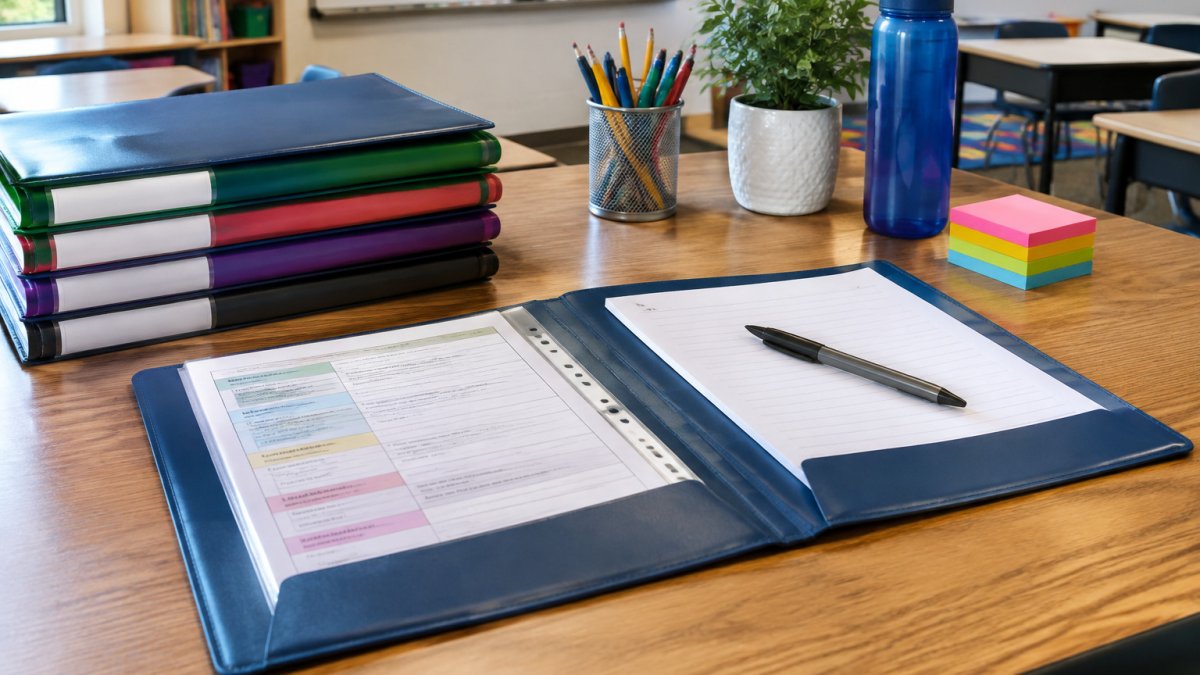
An emergency sub plan packet is a folder you keep ready for unexpected absences. It should let any adult run a normal day without contacting you first.
Assemble in this order, because each layer depends on the one before it:
- Cover sheet and welcome note. One page: your name, room number, the names of two nearby teachers who can answer questions, and where the packet lives. This is the first thing a substitute reads.
- Daily schedule and duty roster. Include lunch, recess, specials, and dismissal times, plus any supervision duties. Note the days and times that differ from the norm.
- Class roster and attendance sheet. Add pronunciation notes, seating chart, and a column for students who receive pull-out services and when they leave.
- Classroom procedures. Line-up, restroom, water, pencil sharpening, technology use, and what to do when a student is absent. Write these as short numbered steps, not paragraphs.
- Behavior expectations and management guidance. State your signals (a call-and-response, a hand raise, a chime), your reward system, and the two or three redirections that work with your class. Avoid describing consequences you would not want a substitute to enforce.
- Emergency contacts and safety information. Front office, nurse, counselor, and the administrator on duty. Include allergy and medical notes only in a sealed page labeled for the nurse or administrator.
- Backup activities. Two or three printables from the list above that need no preparation and no technology. Choose ones your current class has not already completed.
- Subject-specific guidance. For art, music, PE, or lab classes, add a one-page note on materials, cleanup, and any equipment that must stay locked.
Grade-band variations matter more than most packets acknowledge. For early elementary, add a picture schedule and a restroom sign-out with icons. For upper elementary, add a finished-work choice board.
Maintain the packet on a termly cycle.
Assemble Your Printable Activity Folder This Week
Set aside one afternoon. Print ten activities across two or three subjects, choose three management tools, and build one emergency sub packet. Label every folder with the subject, grade band, and date you last updated it.
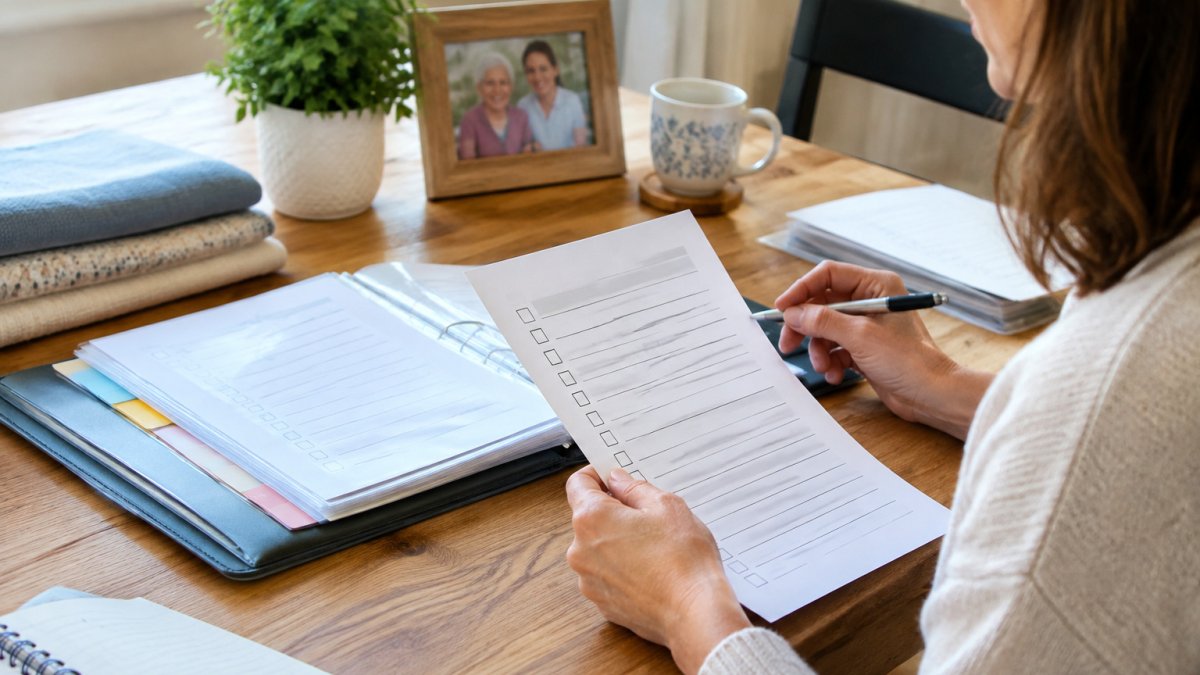
Work through this checklist:
- Print five to ten activities covering reading and math
- Add one or two management printables to a clear folder
- Create a sub packet with roster, schedule, and emergency contacts
- Label each folder by subject and grade band
- Store the folder where a substitute can find it in under a minute
Once your folder is set up, you can browse the shop for more classroom printables and seasonal sets.
Frequently Asked Questions
What should be in a substitute teacher folder?
A useful substitute folder covers the basics a stranger needs to run the day: the daily schedule, attendance sheet with student names, classroom procedures, emergency contacts, and school information such as bell times and where to find restrooms or the office. Add two or three backup printable activities that need no preparation, along with clear instructions for each. Keep it current by updating the roster and schedule whenever they change, and store a copy in a place your administrative assistant can reach.
Where can I find free printable classroom activities for kids?
Many teachers share free printables through school district resource libraries, teacher blogs, and educational publisher sample pages. Check the usage terms before you print, since some free sets are for personal classroom use only. When you compare resources, look for activities that are editable, print cleanly in black and white, and state the grade band they were designed for. Free files work well, but a short review of each one saves time later.
How do printable classroom management tools help during activities?
Printable tools such as visual timers, rotation charts, behavior expectation cards, and simple table-group checklists make routines visible so students know what to do without constant reminders. They are most useful during transitions and independent work, when a substitute or a busy teacher cannot give each child individual attention. Post the expectations where students can see them, and keep the same tools across activities so students recognize the routine quickly.
Can printable activities be used with a substitute who has never met the class?
Yes, if the activity includes clear, step-by-step directions that do not depend on the teacher's verbal explanation. Choose activities that students already know or can follow from a single page, and include a sample completed example. Pair each activity with a note on what to do when a student finishes early, and place the materials in a labeled folder so the substitute can find them quickly without searching the room.